
Finance change: how Triodos Bank looks at the future of energy storage
Every month, Energy Storage NL introduces a new member to its supporters. This month we meet Triodos Bank, a sustainable bank focused on financing the energy transition and other societal changes. In this interview, Remko de Bie, Energy & Climate Relationship Manager, shares how Triodos Bank is fulfilling its role in the energy transition and its vision for the development and financing of energy storage.
Can you briefly explain how Triodos Bank contributes to the energy transition and what role energy and climate play within your current strategy?
Triodos Bank financed the first onshore wind turbine in 1987. In the early 2000s we were one of the first banks to finance solar farms, and in 2018 we financed our first large-scale battery project. Triodos' motto is ‘finance change, change finance’. We finance change - in this case the energy transition - and want to change the financial world at the same time. It's not for nothing that for nine years in a row, according to Clean Energy Pipeline, we have been the most active funder of renewable energy in Europe.
What role does energy storage play in energy transition from the perspective of a sustainable bank? And how does storage fit into Triodos' investment and financing strategy?
For us, the first question is always what impact a project has on the energy transition. Only then do we assess the other aspects needed to analyze a financing request. In 2020, we decided to focus less on standard solar and wind projects. Not because these are no longer relevant, but because these markets have matured. Among other things, we then started to focus specifically on energy storage. For the energy transition to succeed, energy storage is the logical next step after realizing generation by solar and wind.
For us, the first question is always what impact a project has on the energy transition.
Is Triodos already currently supporting or financing concrete storage projects? If so, what type of projects are these and how do you view the development of this market toward the future?
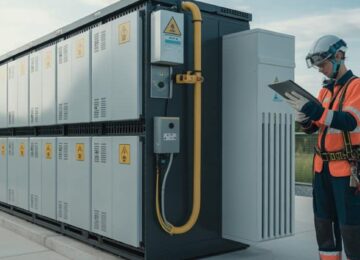
In the Netherlands we have now financed more than ten battery projects, ranging from 10 megawatts / 10 megawatt hours to 340 megawatts / 1.4 gigawatt hours. Initially these were mainly stand-alone projects, but we are now seeing more and more so-called co-located projects. These involve linking a battery to a solar or wind farm. The projects have different business models, ranging from tolling financing to full exposure to market risk (merchant risk), and everything in between.
In 2025, for the first time, we saw all three major Dutch banks, along with some foreign banks, participating in two major battery projects in the Netherlands. We see this as the first signal that the stand-alone market is starting to mature. We expect the co-located market to be the next step.
What types of energy storage projects (for example, batteries, thermal storage or molecule storage) does Triodos currently see the most potential in?
In the coming years, we expect many co-located battery projects on the medium-voltage grid in both solar and wind projects. The next logical step is to make short-term electricity storage more sustainable, for example by using Sodium-ion batteries. This will be followed by long-term electricity storage (Long Duration Energy Storage), for example through vanadium flow batteries.
With the storage of electricity - or electrons - we expect to be fine. Molecule storage, on the other hand, is still less developed. We did finance our first electrolyser last year and are in discussions with many entrepreneurs about various forms of molecule storage. This development is coming, but is still at an earlier stage than electricity storage.
Heat storage has not developed as fast as electricity storage in recent years, partly because of prolonged uncertainty in the heat market (e.g. around the Collective Heat Act) and because heat storage is highly localized, with therefore limited outlets and greater risks. At the same time, heat storage is crucial for the energy transition because heat still represents a large part of the total energy demand in the Netherlands. We have already set our first projects in heat generation (including geothermal, pyrolysis and PVT panels); storage we now see mainly through heat and cold storage (WKO) or briefly in heat networks. The next step is further development of thermal storage, which we are discussing with several parties.
From a financial perspective: what makes an energy storage project ‘bankable’ for Triodos? What conditions must a project meet to make financing possible?
The minimum requirement is that a project generate a reasonably predictable cash flow. This means that the technology used is sufficiently technically developed, can be built with a high degree of certainty and can be properly controlled and maintained during the operational phase. In addition, the market in which the plant operates must be sufficiently deep and broad to generate structural revenue. Both the technical and economic assumptions must be validated by an external party.
What challenges does Triodos currently face in financing and realizing energy storage projects in the Netherlands?
Currently, the biggest uncertainty for energy storage projects is the development of transportation costs. Fortunately, new connection contracts are being developed by grid operators, which removes some of this risk. For co-located projects, another factor is that there are still insufficient bankable contracts with control parties, such as optimizers and aggregators. Many owners of solar or wind farms have insufficient knowledge of trading on the electricity markets and are therefore dependent on an external control party. In practice, we still regularly encounter contracts in this regard that place a disproportionate amount of risk on the battery owner.
In the end, all parties involved benefit from the success of the energy transition. We can only achieve that together.
In what ways can collaboration within Energy Storage NL help address these challenges?
Engaging in the conversation with all stakeholders in the market - such as battery owners, control parties, grid operators and financiers - provides a better understanding of what each party needs and what they themselves can contribute. In the end, all parties involved will benefit if the energy transition succeeds. We can only achieve that together.
What was the main reason for Triodos to become a member of Energy Storage NL?
In the early years, the market was still small and manageable. We had a good idea of what was going on and who was active. Now that the market is becoming more mature, membership in Energy Storage NL helps us keep an overview. Our contribution will mainly consist of helping to develop new niche markets within energy storage and showing that these markets are also fundable.
Finally, what does Triodos believe is needed from policy, market and sector to realize energy storage in the Netherlands faster and on a larger scale?
Above all, we see a more active role for government. Not so much in the form of subsidies, but by developing practical, tailored legislation. This can create a level playing field in Europe for energy storage, which is essential for further scaling up.