
About energy storage
In the Netherlands, the energy system is rapidly becoming more sustainable. Large gas and coal-fired power plants are making way for wind and solar farms, among others, resulting in times of large surpluses and shortages. This forces us to be smarter about energy supply and demand. Energy storage - where energy is stored and later released - is a means of giving flexibility to the energy system. Moreover, changes in electricity supply and demand at the local level create capacity problems in the power grid.
Why energy storage?
The integration of renewable energy sources into the electricity system introduces flexibility challenges. Demand and supply fluctuate greatly due to the variability of wind and solar energy. It is critical to bring flexibility into the system, both in terms of demand management and storage and conversion.
Flexibility in the energy system can be obtained in several ways, including demand-side management, curtailment, interconnection, conversion and storage. Storage and conversion play an essential role in ensuring a robust and flexible energy system. Storage can help manage peaks in supply and store excess energy for later use. This approach to storage and conversion encompasses all forms of energy storage and conversion, making the system more flexible and resilient.
What is energy storage?
Energy storage is critical to addressing these challenges. Storage technology can help balance energy supply and demand on different time scales, reduce grid congestion and build strategic reserves. The goal is to create a flexible and stable energy system that is reliable and affordable without dependence on fossil fuels.
There are various forms of energy storage, such as electricity storage, thermal storage and renewable molecule storage. These various techniques can address specific applications and timeframes, from milliseconds to seasons. A successful energy transition requires strategic and accelerated implementation of energy storage.
Enabling the energy transition
For the energy transition to succeed, we must take an integrated approach and apply innovative concepts. Creating space in policy, market models and regulations for innovative solutions is essential. Only by utilizing storage and conversion at all levels can we provide sufficient flexibility to meet the challenges of the energy transition.
In short, energy storage is the key to building a sustainable, reliable and affordable energy system capable of balancing energy supply and demand at all levels and time scales.
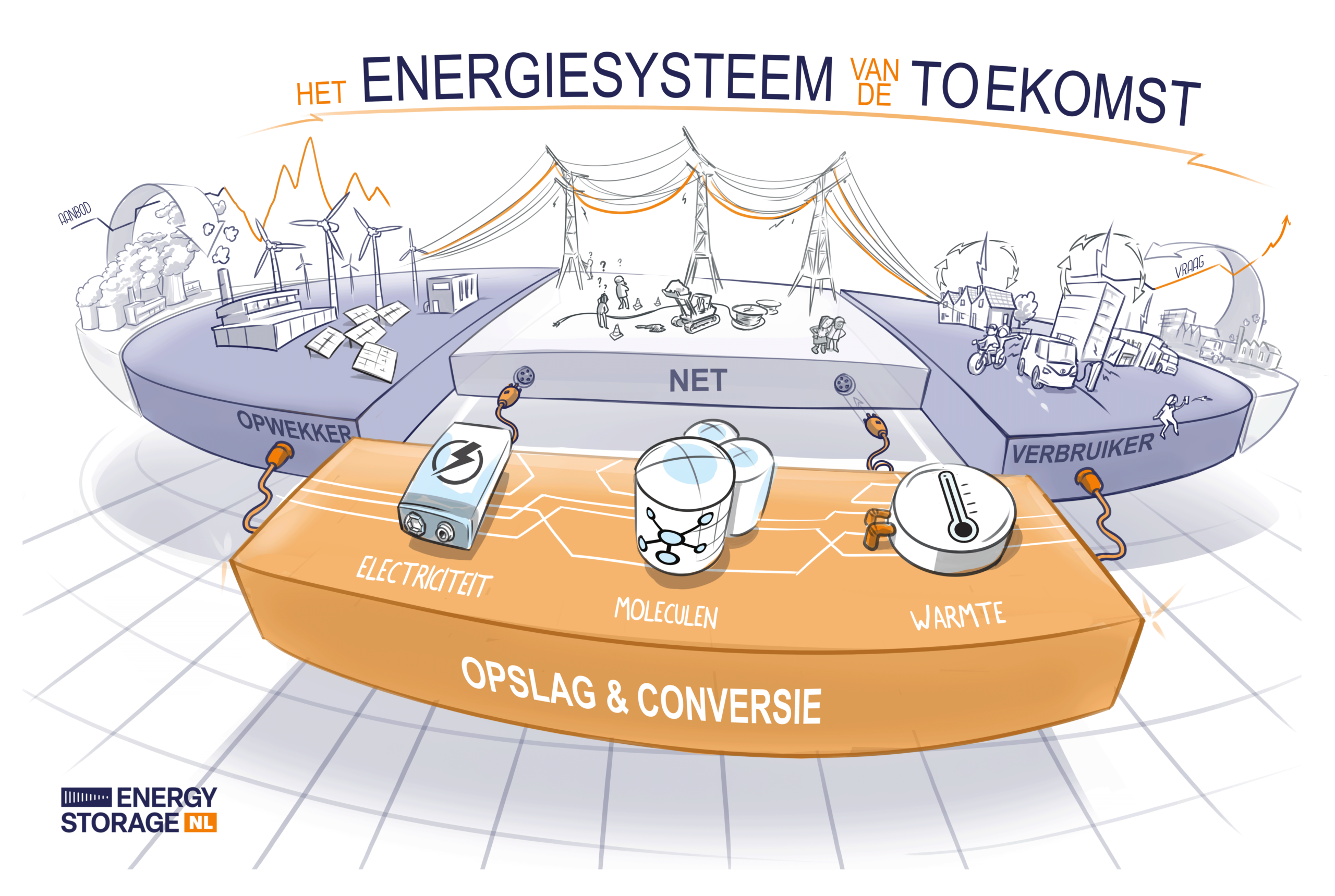
Talking plate the Energy System of the Future
This talking point clearly shows why energy storage is indispensable for a reliable, affordable and future-proof energy system.
On the production side, we are making the shift from fossil to renewable energy. In doing so, we are shifting from a predictable and constant generation profile to a weather-dependent system, where sun and wind are not always available.
On the demand side, electricity consumption is growing rapidly due to electrification of households and businesses. At the same time, new forms of local energy use are emerging, such as energy cooperatives and energy hubs, in which producers and consumers are increasingly linked directly.
These developments are putting increasing pressure on the power grid. Grid reinforcement is essential, but not sufficient on its own. Even with a heavier grid, there will continue to be peaks in production and consumption that occur only a few times a year. Sizing the grid solely for those exceptional peaks is inefficient and costly.
Therefore, energy storage and energy conversion are structurally necessary.
Storage makes it possible to fully utilize peaks in solar and wind production, make renewable energy available when it is needed and offer developers a fair price for their generated power. At the same time, storage and conversion ensures that renewable energy reaches consumers at the right place at the right time. Companies and households thus benefit from more stable energy prices. In addition, we structurally reduce the demand for electricity, making more capacity available to connect new companies or residential areas.
The central message of the discussion board is clear: generation, consumption, grid reinforcement and energy storage must develop hand in hand. If one of these links lags behind, the energy system will be out of balance.
Only by giving energy storage and conversion a structural place will we build an energy system that is more affordable, more stable and less dependent on fossil energy.