

Ore Energy and Budget Thuis are building a 1 GWh multi-day iron-air energy storage facility, a first for European energy suppliers
A Dutch energy supplier has committed to 1 GWh of iron-air energy storage to reduce energy costs for consumers; the first 400 MWh will be delivered in 2028.
Ore Energy, the Dutch company specializing in multi-day iron-air energy storage, announced on June 22 an agreement with Budget Thuis, one of the largest energy suppliers in the Netherlands, to build 1 GWh of long-duration iron-air energy storage (LDES). The agreement represents the largest commercial deployment of iron-air energy storage on the European mainland to date and the first with a European energy supplier. The agreement begins with an initial phase of 400 MWh, with delivery scheduled for 2028.
For Budget Thuis, the agreement is a strategic move to offer customers access to more affordable, more reliable, and increasingly sustainable electricity. As the Dutch electricity grid becomes increasingly dependent on wind energy, there is a growing need for multi-day energy storage that can bridge periods of low renewable energy generation and reduce reliance on fossil fuel-based backup power. Ore Energy’s battery technology uses iron, water, and air to store energy for up to 100 hours. The system is designed to address one of the biggest reliability challenges facing European power grids: multi-day periods with insufficient renewable generation that short-term batteries cannot bridge cost-effectively. By storing excess renewable electricity and deploying it at times when the grid would otherwise rely on fossil fuel generation, iron-air batteries can reduce dependence on gas-fired backup and help make green electricity available when it is needed most.
Once operational, the energy storage system will be deployed by Budget Thuis as an integrated multi-day energy storage solution within the Dutch power grid. The installation consists of multiple interconnected 40-foot battery containers from Ore Energy and can be configured for storage durations ranging from 24 to 100 hours. Because the technology uses iron, water, and air—and therefore no lithium or cobalt—it is non-flammable and can be produced using a fully European supply chain. This strengthens the security of supply for the battery chain and reduces dependence on imported critical raw materials.
“European power grids are already curtailing clean electricity on a large scale. Electricity that costs billions to generate is being wasted, while we remain dependent on fossil fuels during periods when there isn’t enough green power. Batteries with a short storage duration alone do not solve this problem. They shift solar power by a few hours, but European power grids with a high proportion of wind energy need storage that can last for days, not hours. Our iron-air batteries were developed precisely for this purpose: they store wind energy when the wind is blowing and release it when there is no wind. In this way, they replace the gas-fired power plants that currently fill the gaps during multi-day periods of green power shortages, with a supply chain that Europe controls itself,” says Aytaç Yilmaz, co-founder and CEO of Ore Energy. “We’ve demonstrated that our iron-air chemistry works at a European energy company, and this step marks the next phase in commercialization: a significant volume, linked to a concrete project, with an energy supplier that understands what multi-day storage means for the energy system. We believe that iron-air storage for wind energy will become just as important as lithium-ion has become for solar energy.”
For energy suppliers, multi-day storage is becoming a strategic asset. Short-duration batteries play an important role in balancing the grid over the course of hours, but as more are installed, they increasingly compete for the same intraday arbitrage opportunities, putting pressure on returns. As the share of renewable energy rises, the multi-day renewable deficit becomes more significant, while short-duration storage increasingly becomes a commodity. By shifting renewable electricity across days rather than hours, iron-air storage can reduce exposure to volatile wholesale electricity and gas markets and help decrease the grid’s reliance on gas-fired backup.
“Providing affordable and reliable energy to our customers is at the heart of what we do, and multi-day storage gives us a way to store green electricity when it’s plentiful and deliver it when it’s most valuable,” says Annemarie Buitelaar, CEO of Budget Thuis. “Iron-air technology is particularly attractive because it is designed for long-term energy storage and offers a cost structure that is well-suited to multi-day storage, where conventional batteries are often less economical. For us, this is about reducing our exposure to fluctuating fossil fuel prices, while giving customers access to cleaner and more reliable electricity in the long term. Ore Energy has proven the technology and has the expertise to roll it out. That’s why we’re committing to 1 GWh within our portfolio, starting with an initial phase of 400 MWh.”
The agreement marks the move toward large-scale implementation of a technology that has now been validated in two grid-connected pilot projects. In February, Ore Energy announced the successful completion of a pilot of his iron-air system at EDF in France, the first grid-connected demonstration of long-duration iron-air storage of its kind in Europe. During the pilot, which ran from August to November 2025, it was demonstrated that the system can store energy at an energy company under realistic conditions and supply it for up to four days. Ore Energy had previously completed a grid-connected system in Delft, thereby validating its integration into the European distribution infrastructure.
Latest News
 News
News
Looking Back: Energy Storage Day 2026 – Energy Storage as the Key to a Flexible Energy System
October 8, 2026 News
News
ESNL Response to Parliamentary Letter on Grid Congestion: Important Steps, but the Business Case for Flexibility Is Under Pressure
October 5, 2026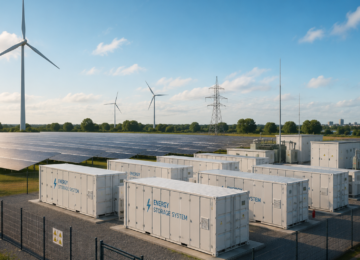 News
News