
ESNL call: careful design choices important for energy storage in capacity mechanism
The security of supply of the Dutch energy system is coming under increasing pressure. In the Security of Supply Monitor 2025, TenneT concludes that the Netherlands will face a structural capacity shortage starting in 2033, rising to 1.5 GW in 2035. Due to the phasing out of fossil power plants, the strong growth in electricity demand and the increase in weather-dependent generation, it is becoming increasingly difficult to keep supply and demand in balance. Energy storage plays an important role in this balancing.
Against this background, the Ministry of Economic Affairs and Climate (EZK) is studying what measures are needed to ensure security of supply. During the summer, EZK will present a first draft. Energy Storage NL (ESNL), the trade association for the Dutch energy storage sector, sees a central capacity mechanism (CCM) as an essential instrument to achieve sufficient flexible and reliable capacity in a timely manner.
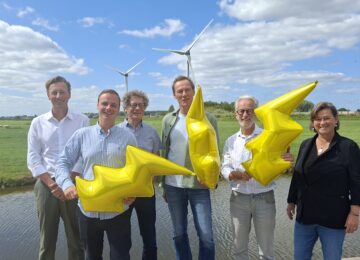
On the basis of a position paper (here) yesterday, ESNL entered into discussions with the Minister and State Secretary for Climate and Green Growth. Here, one of the topics was the proper establishment of a capacity mechanism.
From energy-only market to investment security
In the current Dutch electricity market, producers are paid only for the energy actually delivered. In a system with a lot of solar and wind energy, these price signals are proving increasingly inappropriate. A central capacity mechanism fills this gap by compensating market parties for keeping necessary capacity available. This capacity is then contracted through auctions, with clear obligations, fees and possible penalties for non-compliance.
The social value of storage within a CCM
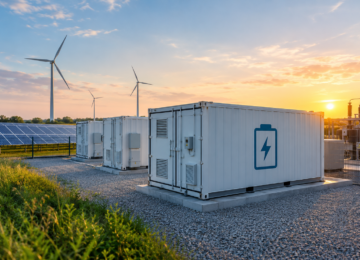
Energy storage is an essential component in ensuring a reliable energy system. Storage allows electricity to be made available at times of scarcity, prevents wasteful renewable generation, and helps to dampen price spikes. Thus, storage not only supports security of supply, but also the affordability of the system.
However, without additional measures, such as a CCM or flexible contract forms (CSC or TDTR), storage risks slowing down or becoming stagnant. The business case remains uncertain in an energy-only market, while precisely this flexibility is needed to avoid future shortages.
International examples show potential for CCM
Other European countries show the positive results of capacity mechanisms. Belgium and the United Kingdom show that technology-neutral CCM leads to a cost-effective technology mix, in which storage plays an increasing role. In Belgium, much of the newly contracted capacity now consists of storage and flexibility, thanks in part to long-term contracts balanced incentives through good compensation and no excessive penalties. In the UK, nearly 7 GW of battery capacity was contracted through the CCM by 2025, equivalent to 20 times the Dutch battery capacity.
Vision ESNL
According to ESNL, it is important that a Dutch CCM be carefully designed. Realistic de-rating factors are needed to correctly value the actual contribution of different technologies to security of supply. In addition, contract durations must match investment costs, especially for long-term storage (LDES). Coordination is also needed between a nationwide CCM and local congestion measures so that flexibility is used effectively. Finally, the mechanism must fit within the European policy towards a carbon-free electricity system, thus avoiding fossil lock-ins.
Energy Storage NL advocates the rapid introduction of a technology-neutral central capacity mechanism in the Netherlands. A CCM offers the possibility of cost-effectively preventing future capacity shortages while giving room for CO₂-free flexibility, such as energy storage. International experience shows that this not only increases the security of supply of the system, but also contributes to an affordable energy transition. A reliable energy system and a sustainable energy system go hand in hand. With a well-designed CCM, storage can make a structural contribution to both goals.
Read the position paper here.