
Stedin's Innovation-Driven Flextender
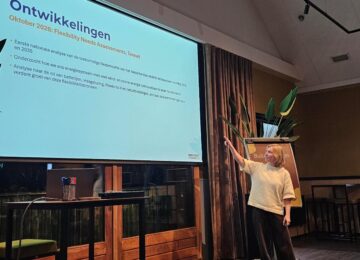
Stedin is exploring how best to design a new, innovative flex tender using CO2-free alternatives. The grid operator issues calls for proposals for flex tenders to address grid congestion in areas where grid reinforcement is delayed or impractical, and where no flexibility can be found among existing customers. The current design of flex tenders has a number of shortcomings: fossil fuel-based solutions produce emissions (nitrogen or ammonia) that exceed nitrogen standards, and short-duration batteries (<4 hours) cannot fully cover all demand profiles. For this reason, Stedin is now seeking a more appropriate approach to flextenders.
LDES and hybrid as a solution for a CO2-free flextender
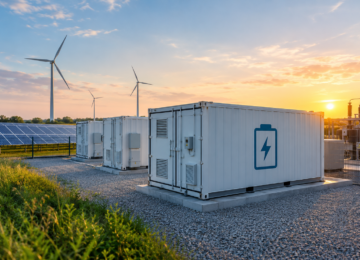
Stedin views LDES, alternative fuels such as hydrogen and biogas, or a hybrid solution combining storage and fossil fuels as better solutions for congestion lasting 4–12 hours and more than 12 hours. Compared to gas-fired power plants, these alternatives offer a number of advantages. First, there are fewer regulatory restrictions, such as nitrogen emission standards. Second, they may be less expensive because the assets are better suited to value stacking can do. Stedin plans to test this type of tender in 2027 with three 10-MW pilot projects. The requirements are that the technology must be able to provide a solution for either 4–12 hours or more than 12 hours. Furthermore, CO2 and nitrogen emissions must be near zero, and the system must be as quiet as possible. Hybrid solutions are also conceivable. Compensation will consist of an availability fee and an activation fee. Market participation is permitted, and the contract term will be 7–10 years. Additionally, the technology’s TRL must be 8 or higher by 2027.
Input Requested
Stedin previously asked Energy Storage NL to help develop the innovative flextender and to now test these design criteria with our members. If this type of flextender and the pilot projects prove successful, Stedin may put 500–1,000 MW out to tender under this format over the next five years.
ESNL has asked its members via email to review the proposal for the flex tender and to submit their feedback by July 29 at the latest. ESNL will compile the responses and submit them to Stedin.