
Storing Renewable Energy as Heat: Cesar Heat Storage—Long-Term and Seasonal Storage
Every month, Energy Storage NL introduces a new member to its membership. This month, we’re getting to know Cesar Heat Storage, A developer of thermal energy storage systems that convert excess electricity into heat and store it long-term in rock. In this way, Cesar Warmteopslag helps address one of the major challenges of the energy transition: making renewable energy available when it is needed most. In this interview, Cesar Warmteopslag discusses the opportunities for long-term and seasonal storage, its applications in sectors such as greenhouse horticulture and industry, and the role that heat storage can play in addressing grid congestion and making our heat demand more sustainable.
Could you briefly explain what Cesar Warmteopslag does and what role your heat storage system plays in the energy transition?
Cesar Heat Storage is developing low-tech Heat storage systems that convert sustainably generated or surplus electricity into heat and allow it to be stored for extended periods. Consider, for example, electricity from solar panels that is not immediately needed at the time it is generated. Instead of feeding this energy back into the grid or letting it go to waste, we store it in the form of heat.
The Cesar heat storage system essentially functions as a giant, optimally insulated heat storage unit and is also carbon neutral.
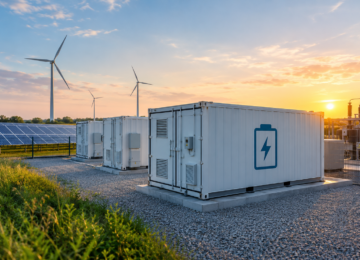
The core of the system consists of natural rock (magnetite) that can be heated to a temperature exceeding 500°C. Thanks to its excellent insulation, the heat remains available for an extended period. As soon as there is a demand for heat, this energy can be converted via a heat exchanger for applications such as heating buildings, greenhouse horticulture, or industrial processes. This heat can also be used for steam production.
The use of the Cesar storage system helps prevent grid congestion and imbalances, since renewable energy is not always available when demand is at its peak. Long-term heat storage can bridge that gap and thus serves as a valuable complement to the energy transition.
Cesar Heat Storage is used in residential, commercial, livestock, (greenhouse) horticulture, and industrial applications. In which of these sectors do you currently see the greatest opportunities for heat storage, and what developments are driving this trend?
Although the Cesar heat storage system is used in all sectors, the greatest opportunities currently lie in greenhouse horticulture, industry, and residential construction.
Both in industry and in greenhouse horticulture, the demand for heat is high, and companies often have a significant amount of their own renewable energy generation. It is precisely this combination that makes heat storage very attractive.
For greenhouse horticulture, the system makes it possible to use locally generated solar energy on-site as much as possible. This is becoming increasingly relevant now that feeding electricity back into the grid is no longer a given and business owners are looking for alternatives to natural gas.
Another significant opportunity lies in the industrial sector. Many industrial processes require heat at higher temperatures. Fossil fuels are still widely used for this purpose. By converting electricity into stored heat during off-peak hours, it becomes possible to replace some or all of that fossil fuel consumption with renewable heat.
We also see definite opportunities and possibilities in the built environment, particularly when multiple homes or buildings share a heat storage system. The application and scale will ultimately vary depending on the situation.
Can you share a real-world example in which the use of Cesar Heat Storage clearly demonstrates the added value that heat storage can provide?
At our facility in Kesteren, we recently installed a system with a storage capacity of approximately 550 kWh of usable heat at 450 degrees. This system is linked to an energy management system. Among other things, this allows us to determine when it is most advantageous to charge the storage unit.
We use the knowledge and real-world data we collect through this process to further optimize the technology and its control systems for future applications and systems, and to take the next step toward broader market introduction.
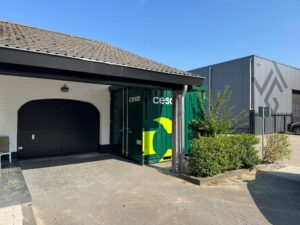
Cesar Mini attached to a detached home
In addition, we plan to install a large-scale, modular system as a demonstration facility at our site in Kesteren. We expect to have it operational in Q1 2027. This storage system is designed for a storage capacity of 120 MWh and a charging and discharging capacity of 200 kWh per hour, and will serve as seasonal storage for heating multiple commercial buildings.
Charging is primarily powered by surplus energy from existing PV panels, as well as by taking advantage of low or negative electricity prices and through peak shaving on the power grid.
Grid congestion poses an ever-greater challenge to the energy transition. In your opinion, how can long-term heat storage help relieve the strain on the power grid?
The advantage of a Cesar thermal storage system is that it allows you to use energy at a different time than when it is generated. This is important for reducing the load on the power grid, because supply and demand are becoming increasingly out of sync.
When there is a lot of solar or wind energy available locally, a thermal storage system can absorb electricity and convert it directly into heat. This means the electricity does not first have to be fed back into the public grid. Conversely, at a later time, when heat is needed, there is no need to draw a large amount of electricity from the grid again.
With smart (EMS) control, the system can also take into account grid load, available local generation, and electricity prices. For example, the system can charge at times when plenty of electricity is available and charge during peak load periods.
Heat storage does not solve grid congestion on its own, but it is certainly part of the solution—especially in locations where there is already a significant amount of renewable electricity and a consistent demand for heat.
Heat storage makes it possible to store renewable energy from the sun and wind for months at a time. Why do you think this type of seasonal storage is essential for a future-proof energy system?
Seasonal storage is essential. A key issue in the future energy system is not only how much renewable energy we produce, but above all when that energy is available. For example, solar panels generate a lot of electricity in the summer, while the greatest demand for heat occurs in the winter.
Seasonal storage brings those two moments closer together. Energy that is available during a period of high generation is stored in large quantities as heat and can be used much later. This allows us to look beyond storage for just a few hours or days.
This is relevant because heat accounts for a large portion of total energy demand. If we have to meet that heat demand with electricity on an as-needed basis, it places too much of a burden on the energy infrastructure.
Seasonal storage therefore gives renewable energy a longer “shelf life,” so to speak. It’s not just about generating energy when conditions are favorable, but also about storing that energy until the moment it actually has value.
With the Cesar battery, we offer the ultimate solution to tomorrow’s energy needs. We firmly believe that large-scale thermal energy storage is the key to a sustainable future.
Electricity storage is getting a lot of attention, even though heat accounts for a large portion of our energy demand. Why do you think heat storage deserves a more prominent role in energy policy and the energy transition?
Heat storage deserves a more prominent role in energy policy because more than half of the Netherlands’ energy demand consists of heat. When people think of energy storage, the first thing that often comes to mind is storing electricity in batteries. While this is understandable and necessary to some extent, it is only part of the picture. After all, we use a large portion of our energy in the form of heat—for example, for buildings, greenhouses, and industrial processes.
That is why we believe it makes sense to consider not only how we can store electricity, but also the form in which we ultimately need that energy. If the ultimate goal is heat, then it makes a lot of sense to convert available electricity directly into heat and then store it thermally in a Cesar storage system.
In our view, heat storage and electricity storage should not be seen as competitors. They each have their own role within the energy system.
A future-proof energy policy should therefore evaluate different forms of storage side by side and, above all, determine which solution is the most efficient and appropriate for a specific location and application.
In your opinion, what is currently the biggest obstacle to the large-scale adoption of thermal storage in the Netherlands, and what step would have the greatest impact in accelerating that development?
A major obstacle is that long-term thermal storage is still relatively unknown. When it comes to sustainability and energy storage, the focus is often on electricity generation, grid reinforcement, and electric batteries. As a result, thermal storage is not yet automatically considered when seeking solutions to energy or congestion issues.
In addition, there must be a viable business case for every investment. Factors such as energy prices, available subsidies, local generation, heat demand, and existing infrastructure all play a role in this. For new technologies, it is therefore important that laws, regulations, and incentive programs provide sufficient flexibility to enable larger-scale pilot projects.
In our view, the greatest impact is achieved when heat storage is systematically incorporated into energy, heating, and grid plans. Not because heat storage is the solution in every case, but because it must be one of the options that is seriously explored.
More practical projects are essential in this regard. They allow us to demonstrate performance and potential applications, while at the same time raising awareness of and building trust in the technology.
How do you expect the role of thermal storage to evolve over the next five to ten years in the built environment, greenhouse horticulture, and industry?
We expect that heat storage will increasingly become part of a broader energy solution in the coming years due to grid congestion and the phase-out of natural gas. The form this takes will vary by sector.
In the built environment, we see particular potential in collective systems. Instead of making each building more sustainable entirely on its own, heat storage can become part of local energy systems in which generation, storage, and consumption are organized collectively.
In greenhouse horticulture, we expect that the local use of sustainably generated energy from on-site sources will become more important. Heat storage can help growers use the electricity they generate within their own operations and make it available as heat at a later time.
For the industry, there is great potential in process heat and flexibility. Companies can consume energy when it is readily available and use the stored heat when the production process requires it.
We therefore do not expect a single, standard solution. Instead, the trend will be toward a variety of scales and applications, in which storage is combined in increasingly intelligent ways with local generation, energy management, and existing heat demand.
Cesar Warmteopslag recently joined Energy Storage NL. What was the deciding factor for you in joining the trade association?
At Cesar Warmteopslag B.V., we view our membership in Energy Storage NL primarily as an opportunity to make thermal energy storage a more prominent part of the conversation about energy storage in the Netherlands. Since FTH Bouw took over Cesar Warmteopslag’s operations, we have been building on the work of founder and inventor Cees van Nimwegen. In doing so, we aim not only to further develop the technology but also to actively engage with the market.
In our view, Energy Storage NL brings together the various stakeholders in the energy storage sector and maintains contact with market participants, policymakers, and other organizations involved in the energy transition. For a relatively new technology, such a network is extremely valuable.
We would like to learn from other organizations, share experiences, and at the same time contribute our own expertise in long-term thermal storage. In addition, we hope that through Energy Storage NL we can connect with organizations with which we can develop new applications and projects.
Ultimately, the energy transition does not require a single storage technology, but rather collaboration among various solutions. We would like to play an active role in that.
As members of Energy Storage NL, what contribution do you hope to make to the further development of energy storage in the Netherlands?
We want to share our practical knowledge and experience and, where appropriate, contribute to the discussion on energy storage. Together with Cesar, we are working on a relatively simple, low-tech form of thermal storage, in which energy is stored in natural rock. We intend to use the insights we gain from this to further develop the market together.
Together with the other members, we want to ensure that energy storage is no longer viewed as an ‘option’ in energy policy, but rather as the foundation of the energy transition.