

Energy Storage for Several Days: Ore Energy on the Power of Iron-Air Batteries
Every month, Energy Storage NL introduces a new member to its membership. This month, we’re getting to know Ore Energy, an Amsterdam-based spin-off of TU Delft that develops iron-air batteries for long-term energy storage. Using iron, water, and air, the company manufactures batteries that can supply electricity for up to 100 hours. In this way, Ore Energy aims to contribute to a reliable and resilient energy system, even during periods of several days with little sun or wind. In this interview, Ore Energy discusses the role of long-term storage alongside short-term batteries, the lessons learned from the first pilot projects, and what is needed to implement this technology on a larger scale in the Netherlands.
Could you briefly explain what ORE Energy does and what long-duration energy storage (LDES) technology you are developing?
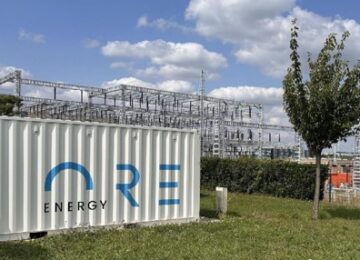
Ore Energy is an Amsterdam-based spin-off of Delft University of Technology that develops iron-air batteries for long-term energy storage. The battery charges by converting rust back into iron and discharges by allowing that iron to oxidize again. In this way, it provides electricity for up to 100 hours from modular containers.
The battery consists of iron, water, and air: inexpensive, widely available, and environmentally friendly. It contains no lithium or cobalt; the electrolyte is water-based and therefore non-flammable; and we rely on a European supply chain.
We were the first to connect iron-air batteries to the European grid and have completed a pilot project lasting several months at EDF in France.
How does long-term energy storage differ from short-term storage, and why are both forms necessary?
Short-term storage, such as lithium-ion batteries, delivers a large amount of power quickly for one to four hours. This is ideal for shifting the solar peak into the evening and balancing the grid. Long-term storage provides power over a period of ten hours to several days, thereby offsetting shortages and surpluses that last longer than a day.
The difference lies in the costs. Lithium-ion batteries are ideal for short-term peaks, but the cost per stored kWh is relatively high. As a result, bridging the gap over several days becomes prohibitively expensive. With LDES, on the other hand, the cost per stored kWh is low, even if the battery cycles less frequently.
Both are therefore necessary because they address different issues. Short-term storage balances out fluctuations throughout the day, while long-term storage ensures that power is still available even after a few windless, dark days. Together, they make the system not only cheaper, but also more reliable and resilient.
How do you see the role of long-duration energy storage (LDES) in a future energy system that runs largely on solar and wind power?
LDES serves a dual purpose. On the one hand, it competes with adjustable gas- and coal-fired power plants. It provides available capacity and energy at times when solar and wind power cannot meet demand. As such, LDES is a key component of supply security.
On the other hand, LDES actually makes use of the cheap renewable electricity that is currently being wasted. When there is plenty of sun and wind, generation is curtailed or prices drop below zero. According to Energieopwek.nl, more than 4 TWh of electricity generation was curtailed in 2025, compared to more than 3 TWh in 2024. Without that curtailment, renewable electricity could have covered 60 percent of electricity demand instead of 57 percent. A large portion of that electricity can be stored long-term and used later. In addition, provided it is connected and deployed in the right locations, storage can alleviate grid congestion by absorbing peaks and thus making better use of the grid’s capacity.
We view LDES as a complement to other forms of flexibility, such as interconnection, demand response, and short-duration batteries. While batteries bridge gaps of hours, LDES bridges gaps of days.
In your opinion, which challenges in the Dutch energy system specifically call for long-term energy storage, and why aren’t existing flexibility solutions always sufficient for this purpose?
The Netherlands is building a lot of offshore wind and solar power on rooftops and in fields, while conventional dispatchable capacity is disappearing. Coal-fired power plants are closing, and gas-fired power plants are operating fewer and fewer hours, putting pressure on their business models. At the same time, demand is growing due to the electrification of heating, transportation, and industry, and the grid is struggling with congestion across nearly the entire country.
Existing flexibility mainly covers short periods. Batteries with a runtime of one to four hours are depleted after an evening peak. Demand response can shift consumption by hours, but rarely by days, and is also difficult to implement. Interconnection certainly helps, but weather conditions such as a windless, cloudy period often affect all of Northwestern Europe at the same time, meaning that neighboring countries also find themselves short on capacity.
What's missing is fossil-free capacity that's available for days on end. That's exactly the gap that LDES fills.
Can you explain what role LDES can play during prolonged periods of low solar and wind generation, such as a so-called ‘Dunkelflaute’?
A "Dunkelflaute" is a period lasting several days with little wind or sunshine, usually in the winter, precisely when demand is high. Today, gas-fired power plants and imports are the main sources of power during such periods, resulting in high prices and CO2 emissions.
Our battery is fully charged in the days leading up to peak demand, when there is a surplus of low-cost renewable electricity, and then provides power for up to 100 consecutive hours. This allows the LDES battery to bridge a large portion of such a period, smooth out price spikes, and limit the use of natural gas. Because our battery can fully bridge a shortage lasting several days, it contributes significantly to security of supply. A capacity mechanism is one of the ways to ensure sufficient regulating capacity in the system. Germany already recognizes this: in the new German capacity mechanism, storage is weighted more heavily the longer it can supply power, and long-duration storage even scores higher than a gas-fired power plant. However, in the first German auction in early November, all contracts still went to gas-fired power plants.
We would like to see the Netherlands follow that approach. TenneT is currently developing the rules for the Dutch capacity mechanism. We advocate distinguishing between storage that can supply power for one day and storage that can supply power for multiple days, so that the value of long-term storage is fully taken into account in the design of our future energy system.
How do you expect the role of long-term energy storage to evolve within the Dutch energy system over the next five to ten years? And what role do you see for ORE Energy in this context?
TenneT expects that in the Monitor Supply Security 2026 that security of supply in the Netherlands will come under pressure around 2030 and that the legal threshold for power shortages will be exceeded by then. Longer periods of calm weather in winter are particularly vulnerable. This is due, among other things, to a decline in conventional controllable capacity in the system and an increase in variable renewable generation, while there is still insufficient flexibility to accommodate that variation. In addition, based on the new Flexibility Needs Assessment Set a target for non-fossil flexibility. Long-term storage can play an important role in this.
We anticipate three phases. Currently, the first systems are being demonstrated and connected. This will be followed by the first commercial projects, often in collaboration with energy suppliers and grid operators. Eventually, LDES could be implemented on a large scale, provided that the market design rewards the value of long-term availability.
Ore Energy aims to enable that growth with a product manufactured in Europe from readily available raw materials. Our goal is for iron-air storage to be a standard component of the grid infrastructure by 2035, contributing to a more resilient and reliable system, both in the Netherlands and beyond.
In France, we've been testing our battery on the grid with EDF for months. We're now bringing that experience to the Netherlands: with Budget Thuis as the customer and in RenewaFlexNL, in which we work with stakeholders across the entire supply chain—from grid operators and energy companies to industrial customers—to identify where long-term storage offers the greatest value.
In your opinion, what is currently the biggest obstacle to the widespread adoption of LDES in the Netherlands, and what step would have the greatest impact in accelerating that development?
The biggest obstacle is the revenue model. The Dutch electricity market is an “energy-only” market, with an emphasis on intraday volumes and physical balancing—areas where short-duration batteries excel. The value of capacity that is available for days on end is not explicitly rewarded. This makes financing difficult for new technology, because investors want to see predictable revenue streams.
The measure with the greatest impact is a capacity mechanism that fairly values storage duration. This requires three things: derating factors that show how much a facility actually contributes to supply security, multi-year contracts for new capacity, and access for new technologies. TenneT is currently developing this proposal, and through ESNL, we are contributing our input.
In addition, a targeted scheme for the first LDES projects would be helpful, similar to the U.K.’s cap-and-floor regime. Furthermore, appropriate grid rates and flexible connection contracts remain important for storage in congestion areas.
ORE Energy has joined Energy Storage NL. What was the deciding factor for you in joining the trade association?
Key decisions regarding energy storage in the Netherlands will be made in the coming years: the capacity mechanism, grid tariffs, connection requirements, and the approach to grid congestion. Energy Storage NL is the platform where the storage sector speaks with one voice to TenneT, the ACM, and the ministry on these issues. We wanted to be part of that.
In addition, ESNL brings together the entire supply chain: developers, energy suppliers, grid operators, and technology companies. For a young company looking to carry out its first projects in the Netherlands, that network and the knowledge-sharing that comes with it are of great value.
Finally, we believe it is important for long-term storage to have a clear place within the sector. Many discussions currently focus on batteries with a runtime of one to four hours. We want to demonstrate the value of longer storage durations.
As members of Energy Storage NL, what contribution do you hope to make to the further development and implementation of long-term energy storage in the Netherlands?
Above all, we want to share our knowledge about what long-term storage is capable of and what it requires. This includes technical specifications, costs, and the experience we’ve gained from our grid-connected pilot projects. This will enable policymakers and grid operators to make calculations based on realistic assumptions.
Through ESNL’s working groups, we’re contributing to the discussion on the rules governing storage—currently focusing on the capacity mechanism and, in the future, on grid tariffs and flexible connection contracts, for example.
To that end, we are seeking to collaborate with other LDES technologies within ESNL. The sector stands to benefit from policies that are technology-neutral but take storage duration into account. If we can achieve this together, the Netherlands will be able to integrate long-term storage into the energy system on time and at the lowest possible cost.
Latest News
 Interview
Energy Storage for Several Days: Ore Energy on the Power of Iron-Air Batteries
November 18, 2026 News
New Spatial Planning Policy Document Highlights the Growing Role of Energy Storage in Spatial Planning
November 17, 2026 News