
New Spatial Planning Policy Document Highlights the Growing Role of Energy Storage in Spatial Planning
On Monday, November 16, the cabinet adopted the new Spatial Planning Memorandum presented. In this national vision, the national government sets the direction for the long-term spatial planning of the Netherlands, looking toward 2050. The memorandum addresses the allocation of scarce space among, among other things, housing, the economy, nature, defense, infrastructure, and energy. As such, the Spatial Planning Memorandum serves as an important framework for future spatial planning decisions by the national government, provinces, and municipalities.
Energy Transition Gets a Boost
The energy transition is placing an ever-greater strain on the limited space available in the Netherlands. The national government is therefore explicitly making the energy system an integral part of land-use planning. There must be sufficient space available for the expansion of the energy system, while at the same time, new spatial developments must be better aligned with the capabilities and future needs of that system.
The government intends to achieve this through, among other things, energy planning. This involves, on the one hand, anticipating the space needed for the future energy system and, on the other hand, guiding where new spatial developments take place. The goal is to better align energy supply and demand and thereby develop a more efficient energy system.
This also has implications for provinces and municipalities. In their spatial planning, they must look ahead sooner to determine what energy infrastructure and energy functions are needed in a given area. In doing so, factors such as the regional trends in energy supply and demand, the available and future infrastructure, and the economic development of an area must be considered in a more integrated manner.
The decentralized energy system is also changing. In the future, generation, consumption, and storage will become increasingly interconnected at the local and regional levels. According to the Spatial Planning Policy Document, this requires not only energy policies that provide incentives and set standards, but also, and explicitly, spatial planning policies.
More space needed for energy storage
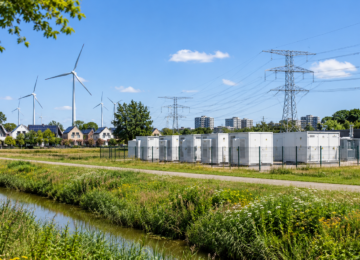
The Spatial Planning Memorandum also explicitly calls for attention to be paid to the spatial integration of energy storage. The national government states that planning policies for energy storage are needed at all levels, as much more storage capacity will be required in the future. This explicitly gives storage a place in the spatial development of the future energy system.
This is important because the growth of weather-dependent renewable energy is increasing the need for flexibility. Energy storage makes it possible to better align supply and demand over time and to make better use of available renewable energy. In local and regional energy systems, storage can also help improve the alignment between generation and consumption.
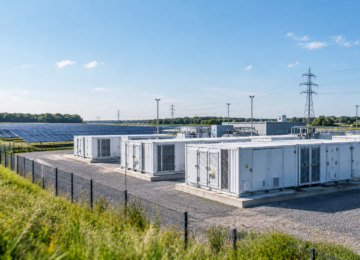
The Spatial Planning Policy Document pays specific attention to system batteries in this regard. According to the national government, the future energy system will include new spatial elements, such as electrolysers and system batteries, while at the same time an increasing number of energy functions must be integrated into cities and landscapes. This calls for sound spatial design that is tailored to the characteristics of an area and focuses on spatial quality, mixed-use development, and the integration of various objectives. The national government also intends to develop design criteria and best practices for this purpose.
From Recognition to Workable Policy
Energy Storage NL is very pleased that the national government explicitly recognizes that much more energy storage will be needed in the future and that this requires planning policies at all levels. It is important that energy storage be included as a full-fledged component of the future energy system in the spatial development of the Netherlands.
The next step is to actually translate these principles into national, provincial, and municipal policy. This must involve establishing clear and workable framework conditions that the storage sector can actually operate within. Simply acknowledging that storage requires space is not enough. Policy must ensure that storage projects can be developed and integrated into the landscape at locations where they add value to the energy system.