
Grid operators: flexibility is becoming the new normal!
Today Netbeheer Nederland outlined the route towards a climate-neutral energy system in 2050 in the system study 'II3050'. This specifically looks at flexibility, specifically also describes the role energy storage and conversion implementation in the new energy system.
Battery Storage
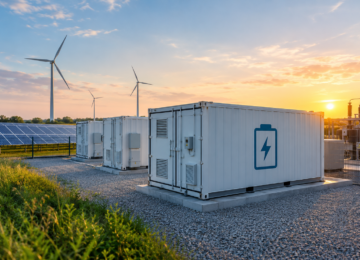
According to the II3050, battery storage becomes a crucial building block of the carbon-free energy system to equalize (multi)daily surpluses and deficits on a national and regional scale. Toward 2050, the scenarios foresee 40-70 GW of battery storage capacity, significantly more than in the first edition of II3050. Batteries placed "behind the meter" in renewable generation additionally offer the possibility to connect even more renewable energy to the system with less deployment of capping.
Molecule Storage
Some of the supply of renewable electricity will be converted to hydrogen, partly to meet demand for renewable molecules, and partly to sustainably convert and store excess supply for the long term (time scale seasons and more), for use in shortage situations. In some scenarios some of the electrolysers are directly connected to wind farms but for the most part they are flexible. In the scenarios, the installed capacity of electrolysis grows to 16-45 GW.
Longer-term storage (weeks to season) requires large volumes of underground storage to keep the energy system in balance. Additionally, strategic storage is needed to cope with several bad weather years in a row, or the (partial) loss of import flows and failure of entire import sites. After 2030, storage volume needs to grow rapidly as more hydrogen is produced by flexible electrolysers and needs to be matched to hydrogen demand. Methane storage. Methane storage is also needed to provide flexibility for demand. The total amount of capacity for CO2-free controllable power and the total volume of seasonal storage (hydrogen as well as methane) needed are about the same for all scenarios.
Heat Storage
Where natural gas or waste gases are currently used for heat supply, in the future electricity will be one of the sources for renewable heat. Power-to-heat also plays a role as a flexibility resource. By 2050, the installed capacity of industrial flexible power-to-heat will grow to 6-11 GW. Heat networks have a peak demand that must be met. Short-term and long-term heat storage is needed to meet peak demand without gas boilers or electric co-firing.
Read the entire report here.