
Energy Storage NL calls on House to better utilize energy storage in grid congestion debate
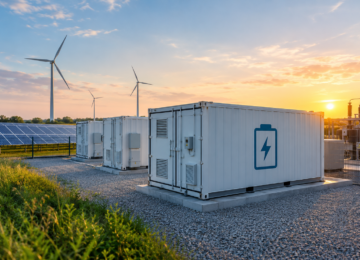
Ahead of the committee debate on Grid Congestion and the Electricity Grid on April 22, Energy Storage NL is calling on the Lower House to more explicitly embed energy storage in policy around grid congestion and the further sustainability of the energy system. In a letter to the House the industry association points out that energy storage plays a crucial role in solving congestion problems on the electricity grid, but that appropriate framework conditions and targeted incentives are not yet sufficiently in place.
Improve contract and site conditions for large-scale storage
According to Energy Storage NL, large-scale energy storage can make an important contribution to reducing both generation and off-take congestion by temporarily storing excess sustainable electricity and making it available again at times of scarcity. In practice, however, it appears that the development of large-scale battery storage in the Netherlands is still too hampered by unfavorable transmission tariffs and inadequate contract forms.
Although the Time-Dependent Transmission Right (TDTR) was previously developed together with TenneT as an instrument to make battery projects more compatible with the grid, its application in practice appears to be limited because there is insufficient residual space available to offer this form of contract at scale. As a result, the rollout of battery storage is lagging behind, even though grid operators' scenarios assume strong growth in battery power toward 2050.
In addition, there is still a lack of sufficient transparency on where large-scale grid storage actually contributes to congestion relief. Energy Storage NL emphasizes that developers, provinces and municipalities need up-to-date and detailed insight at the substation level into peak load, congestion duration and suitable locations for storage.
Encourage energy storage within Contract for Differences
With the continued growth of solar and wind power, the number of hours with oversupply of electricity is also increasing. This is increasingly leading to negative electricity prices and putting pressure on the business case for renewable generation. The government is therefore working on a Contract for Differences (CfD) to limit price risks for new renewable energy projects.
However, Energy Storage NL warns that such a scheme could unintentionally reduce system incentives for flexibility if energy storage is not adequately included in it. Especially in an energy system with a lot of weather-dependent generation, the combination of renewable generation with both short- and long-term storage is essential to better balance supply and demand.
The industry association therefore advocates that the further elaboration of the CfD should explicitly consider energy storage and that proposals should be included within the scheme that actively encourage the integration of storage in new solar and wind projects.
Increase incentives for smart local energy storage
At the local level, Energy Storage NL also sees an important role for energy storage in relieving grid congestion. Storage at households, neighbourhood storage and other forms of local storage can significantly increase their own consumption of locally generated renewable energy and thus relieve the burden on the electricity grid. Yet there is currently no sufficiently attractive financial incentive for households and small consumers to invest in them.
According to Energy Storage NL, users who contribute to local balancing via storage do not currently benefit sufficiently from the societal and system benefits they create. The organization therefore advocates new market incentives and contract forms that financially reward households and groups of small consumers when they contribute to grid balancing and congestion relief through storage.
According to the industry association, these measures could serve as part of an alternative to the net-metering scheme after 2027 and are supported in part by Energie Samen, Holland Solar and FME.
Call to the Chamber
Energy Storage NL asks the Lower House to actively introduce the above proposals during the debate and urge the Minister to take concrete measures that will better position energy storage within the energy system of the future. Only with the right contract conditions, market incentives and policy instruments can energy storage utilize its full potential in tackling grid congestion and further making the Netherlands more sustainable.