

Connection stop in Utrecht: exploit potential energy storage in case of grid congestion
Yesterday's reporting of the full capacity depletion of the electricity grid in the province of Utrecht underscores the urgency of additional measures to deal with grid congestion. The fact that no new or heavier connections are possible in the short term illustrates that the limits of the current energy system have been reached.
This development has direct consequences for housing construction, economic activities and the progress of the energy transition. At the same time, the situation makes it clear that available solutions, such as energy storage and flexibility, are not yet being deployed sufficiently structurally.
Value storage under congestion
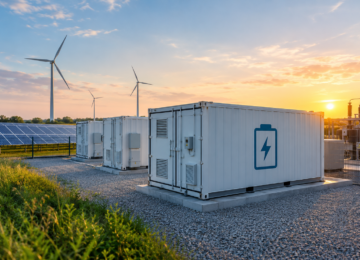
Energy storage, and in particular battery storage, can help reduce grid congestion at multiple levels within the energy system. For example, large-scale storage can enable delayed energy delivery at wind and solar farms so that it does not deliver excess energy when the grid is already full.
In addition, energy storage at companies can enable them to absorb electricity peaks for their production themselves, structurally enabling a small grid connection which frees up additional capacity for others potential customers.
Storage can also provide additional connection capacity in residential areas. Applications such as heat buffers in a residential area allow for a smaller grid connection because peak demand for renewable heat is supplied through the buffer rather than from electric heat pumps which otherwise leads to high electricity demand.
Call ESNL
The situation in Utrecht makes it clear that further delay is not desirable. A coherent approach - in which generation, consumption, grid reinforcement and storage - are developed in concert - is necessary to future-proof the electricity system and prevent further grid congestion.
ESNL thus also sees the situation in Utrecht as an opportunity to pursue a proactive policy on how storage can reduce grid congestion. The industry expects that storage can free up additional capacity to connect businesses and residential areas - temporarily or otherwise. Specifically, ESNL is pleading with the government to consider in the short term placing a (mobile) battery at every overloaded substation in Utrecht. This would not solve all congestion but could ease the situation there by several hours. The effects from the situation in Utrecht may prompt the placement of batteries at several grid congestion areas in the Netherlands.
Latest News
 News
News
GOPACS Auctions Makes Demand for Flexible Capacity Transparent
October 22, 2026 News
News
First Dutch Flexibility Needs Assessment: Flexibility Is Crucial for a Reliable Electric Power System
October 19, 2026 News
News