

ESNL Working Groups in September: From Market Development to Practical Implementation
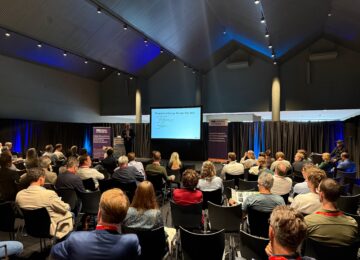
In September, the ESNL working groups on the Built Environment, Large-Scale Energy Storage, and Industry & Businesses met. Together with members and guest speakers, we discussed the market conditions, technical requirements, and spatial planning decisions needed to deploy energy storage more quickly and more intelligently. From flexibility behind the meter to large-scale batteries: members’ practical knowledge took center stage.
Built Environment: Unlocking Small-Scale Storage and Flexibility
The Built Environment working group focused on the growing role of home, neighborhood, and commercial batteries. DNV presented research on small-scale battery systems up to 1 MWh. A major bottleneck remains the double imposition of energy taxes during charging and discharging. At the same time, these systems can contribute to congestion management and, in the long term, to lower societal grid costs. Accurate record-keeping, including for plug-in batteries, remains important in this regard.
The progress of NL Flex was also discussed. Through aggregation, the flexibility of small consumers is made available for congestion management; in July, 255 MW was requested for this purpose. Home batteries are already playing an important role in this. In addition, the working group discussed how the Regional Energy Transition Team is strengthening joint advocacy efforts with the provinces. Finally, it was discussed that, as part of the NEN process related to EPBD IV, ESNL is seeking a market representative for electric batteries to ensure that practical knowledge is properly incorporated into the new methodology for determining the energy performance of buildings.
Large-Scale Storage: Predictable Market Rules and New Trading Opportunities
The Large-Scale Energy Storage Working Group discussed the role of financial participation and local ownership in battery projects. The members emphasized that regulatory requirements must not hinder the ability to implement projects. Discussions were also held with TenneT regarding the revision of the imbalance price methodology. In this context, members noted that imbalance prices cannot be viewed in isolation from inertia, response speed, and the broader system value of batteries. Predictable rules are essential to maintaining investment certainty. The Capacity Management Contract and its developments were also discussed. Finally, it was discussed that the GOPACS auction platform will go live on October 1 with various new, promising features. This will create new opportunities to utilize battery flexibility in a more transparent and market-oriented manner for redispatch.
Industry & Businesses: Space, Long-Term Flexibility, and Manufacturer Responsibility
The Industry & Business working group focused on the practical integration of energy storage into the energy system. Regarding the evaluation of the Key Energy Infrastructure Program, presenters from Antea and the Ministry of Economic Affairs and Climate Policy noted that, in practice, developments are often ahead of policy, meaning that projects are primarily implemented where land, permits, and grid capacity are available. Members emphasized the need for swift, non-restrictive national land-use policy.
Stedin explained an innovation-focused flex tender for CO₂-free solutions capable of serving congestion profiles lasting four hours or longer. Three flex tenders are planned for 2027; if successful, this format could be scaled up over the next five years. The working group also discussed the further development of the Capacity Management Contract. Finally, ESNL addressed the expanded producer responsibility for industrial batteries. Together with Holland Solar, BMWT, and Stichting OPEN, they are exploring how a joint producer organization can ensure registration, collection, and processing. The first phase focuses on batteries up to 1 MW, with registration scheduled to begin on January 1, 2027, and collection and processing on July 1, 2027.
Working Together to Shape the Energy Storage Agenda
These meetings demonstrate that energy storage is becoming an increasingly integral part of market design, grid management, land-use policy, and technical standards. ESNL continues to compile its members’ experiences and share them with government agencies, grid operators, and partners. So please feel free to share your experiences with us.
Latest News
 News
News
Looking Back: Energy Storage Day 2026 – Energy Storage as the Key to a Flexible Energy System
October 8, 2026 News
News
ESNL Response to Parliamentary Letter on Grid Congestion: Important Steps, but the Business Case for Flexibility Is Under Pressure
October 5, 2026 News
News