
Local Seasonal Balance in Residential Neighborhoods: Joule4Joule on Heat, Electricity, and Collective Organization
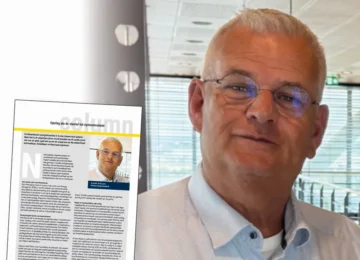
Energy Storage NL actively participates in knowledge and innovation projects. By being involved in research projects, we can substantiate and quantify the added value of energy storage. We apply the results both within and outside our network, ensuring they directly contribute to our policy efforts. In this interview, we speak with Simone Delić-Geerts, Senior Innovation Manager at Enexis, about Joule4Joule. As the lead organization, Enexis is working with eight partners on this collaborative project focused on local energy storage in residential neighborhoods. In her role as innovation manager, Simone is closely involved in the project, which investigates how residential neighborhoods can store and utilize locally generated renewable energy over the long term in a grid-conscious manner. The project integrates heat and electricity and, in addition to technology, also examines collective organization, financing, and decision-making. With nine partners and four pilot sites, Joule4Joule is working on practical solutions for seasonal balancing, better utilization of renewable energy, and grid-conscious design of local energy systems.
Joule4Joule focuses on local energy storage in residential neighborhoods. What challenge in the energy system do you hope to address with this project?
Joule4Joule is investigating how seasonal balance can be achieved in residential neighborhoods. How can we use the abundance of renewable energy in the summer to offset shortages in the winter? By converting summer energy surpluses into heat and storing them long-term, residential neighborhoods can benefit from locally generated renewable energy even in the winter. In doing so, we’re exploring a new perspective on energy storage: one focused not on hours or days, but on weeks and months. In addition, we’re not focusing on individual end users, but on collaboration among groups of small-scale consumers. This helps make better use of renewable energy and can lead to a more grid-conscious solution.
The idea sounds logical, but it requires a fundamentally different structure for our energy system. We are focusing on three innovations: 1) long-term storage, 2) the integration of heat and electricity, and 3) collective organization. Technology is only part of the puzzle. Organizational and administrative conditions are also important: who invests, who owns the assets, who makes decisions, and how costs, benefits, and risks are allocated. In Joule4Joule, we are working with nine partners and four pilot sites to address these interconnected issues. The pilot sites ensure that development remains closely aligned with real-world practice. Our target groups are municipalities, housing cooperatives, and energy communities.
Joule4Joule is open to various forms of local energy storage. What is the process for selecting a specific form or combination of storage technologies?
Storage is crucial for seasonal balance, but it is not the only consideration. At Joule4Joule, we design an integrated neighborhood energy system that combines heat and electricity. Based on that system, we determine which form of storage is necessary and appropriate. This is not just a technical decision; it is also closely tied to how we organize the neighborhood’s energy system.
In Joule4Joule, we are working with four pilot locations, which will ultimately make decisions for their neighborhoods. These are not temporary pilots, but actual homes that require a solution that can be implemented right now. TNO and Zenmo support these decisions with design tools that they are further developing within the project. InvestNL and Energie Samen are exploring financing models and contract types that enable energy sharing. Through energy sharing, the local balancing of supply and demand within groups of small consumers can be organized in a new way.
Given our ambition to achieve seasonal balance, Joule4Joule focuses on long-term storage. By this, we mean storage capable of bridging at least two weeks of winter. Full seasonal storage is not necessary within the project timeline and is not expected to be feasible. Joule4Joule is technology-agnostic: we do not advise on or investigate any specific technology. Energy Storage NL supports us in monitoring developments in the field of long-term storage and applying those insights to the project.
What is the current status of the project, and what initial insights or experiences have you gained so far?
Joule4Joule was launched in April 2025 and will run through the first quarter of 2029. The project is becoming increasingly relevant due to developments related to energy communities, energy prices, and grid congestion.
The first pilot sites have now been modeled, and the design tools are being further developed so that different scenarios can be simulated. Integrated design is proving to be challenging. In addition to a heat network, for example, the buffer, solar energy, and the future development of the entire neighborhood must also be taken into account. We’ve also observed that residents have limited insight into their own energy consumption. This makes it difficult to connect that information to what’s happening three blocks away. That’s why, in practice, an integrated design must be developed in manageable steps. Otherwise, the design process and decision-making will grind to a halt.
In addition, it is becoming increasingly clear that there is no single standard solution, but that various options are possible. We are therefore developing tools that provide insight into the available options, rather than prescribing a single solution. This applies, for example, to ownership models, forms of energy sharing, and the distribution of decision-making authority, costs, benefits, and risks. Such a decision-making framework offers project initiators guidance to make complex choices step by step and to move through the process efficiently.
What could smarter local energy storage and use mean for residents, grid operators, and the power grid?
One of the reasons behind Joule4Joule is the elimination of the net metering program as of January 1, 2027. The idea is that residents with solar panels can ‘offset’ their excess solar power into a long-term buffer, for example, through energy sharing within an energy community. This could potentially make the neighborhood less dependent on external factors. This applies to the sustainability and price of energy, as well as to the use of central infrastructure, such as the power grid. In addition, collective organization can take the burden off residents, as they will not have to arrange everything individually. We are still working out exactly what the offering for residents will look like. For example, a balance must be struck between preserving individual freedom of choice and leveraging collective benefits, as well as between fixed and dynamic prices.
The impact of such a decentralized system on the power grid is also a key component of the project. We are investigating under what conditions seasonal balancing in a residential neighborhood actually reduces the strain on the power grid, how much value this can generate, and how long-term storage can best be utilized for both the neighborhood and the power grid. In doing so, we are also examining the trade-off between the interests of the neighborhood and those of the broader energy system.
What impact do you hope Joule4Joule will ultimately have on the development of local energy storage in the Netherlands?
Joule4Joule was launched a few years ago in response to the question of what an ideal climate-neutral residential neighborhood might look like in the future. The project aims to further develop the key components needed to achieve this and to demonstrate them in practice. These components are partly technical, but also relate to policy, organization, contracts, and collaboration between stakeholders and residents. So it’s not just about storage, but also about how such a collective energy system is organized and supported by residents. Storage in general—and long-term storage in particular—is a crucial part of this.
By putting those pieces of the puzzle together, I hope it will become easier in the future to organize energy at the neighborhood level and provide neighborhoods with local, sustainable, and affordable energy. I hope that in ten years, we’ll look back and be surprised that we didn’t start organizing energy in residential neighborhoods this way much sooner.
Would you like to learn more about the knowledge and innovation projects? Register for Energy Storage Day on October 7 during the Energy Trade Show!