
Energy Storage as the Key to System Flexibility
The energy transition has entered a new phase. While the focus in recent years has been primarily on the rapid growth of solar and wind power, the question now is how we can integrate that electricity reliably and affordably.
Grid congestion, negative prices, and uncertainty regarding grid connections make it clear that generation alone is not enough. Without energy storage, we cannot make full use of renewable generation, and long-term affordability will come under pressure. Storage is therefore not an afterthought, but an integral part of the energy system we are designing today.
From Generation to System Value
I bring that conviction to my work at Energy Storage NL (ESNL). At the intersection of market development, policy, and collaboration, I see every day just how willing the sector is to contribute to solutions. Battery developers, thermal storage providers, molecular storage providers, financiers, research institutions, government agencies, and grid operators are increasingly viewing storage not as a standalone technology, but as part of a broader energy system. That is precisely where ESNL’s strength lies: connecting stakeholders, pooling knowledge, and ensuring that policy aligns with practical needs.
Storage starts with system design
The top priority on the agenda right now is system design. Storage must be factored into decisions regarding grids, connection options, congestion management, market regulation, and business cases from the very beginning. A battery or thermal storage system in the wrong location, without an appropriate contract structure or clear incentives, can contribute very little. Conversely, a storage system deployed correctly at the right location, with good data and clear agreements, can create grid capacity, make better use of renewable generation, and help businesses transition to electrification.
That is why ESNL advocates for both speed and precision. We are actively contributing to the comprehensive energy storage policy agenda, which brings together issues such as grid congestion, spatial integration, financial conditions, and the role of various forms of storage. We are also calling for better contract and site conditions, transparency regarding where storage alleviates grid congestion, and fair incentives for flexibility. The market has great potential, but only with a viable business case. Without appropriate policy, the right incentives, and targeted guidance, storage will not get off the ground on its own.
Guidance and market incentives are needed
At the same time, security of supply is a task in the public interest. That responsibility does not rest with any single party. Governments, grid operators, and market participants must work together to develop a technology-inclusive capacity mechanism in which sustainable flexibility, such as storage, can compete on equal footing. The government provides direction, framework conditions, and policy certainty. Grid operators make system requirements and locations transparent. Market participants invest, innovate, and actually deliver flexibility. Without a market, security of supply cannot be achieved; without public frameworks and reliable policy, there is insufficient investment certainty.
I am therefore optimistic about the energy storage sector, but not without reservations. The technology is there, the urgency is clear, and the market is ready to move forward. What is needed now is leadership: clear goals for 2030 and 2050, actionable policies, and market incentives that reward system-level value. In doing so, we must not limit storage to large-scale batteries alone. Heat storage, energy hubs, home and neighborhood batteries, and molecular storage also have a role to play. ESNL is taking on its role as a connector and catalyst in this process. In this way, we are making storage a fundamental prerequisite for a sustainable, reliable, and affordable energy system—not later, but now.
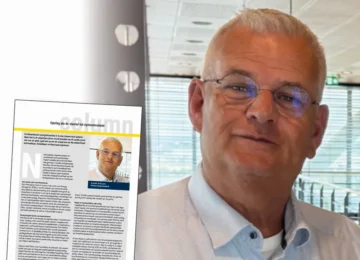
Arendo Schreurs
Director of Energy Storage NL