
Scenarios for 2027: A Clearer Picture of Energy Storage and Demand Trends
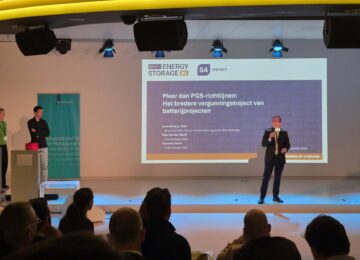
On October 29, Netbeheer Nederland presented the 90% version of the 2027 Scenarios in Utrecht. These scenarios are important for the energy storage sector: they will soon form the basis for the grid operators’ updated investment plans. Energy Storage NL (ESNL) actively participated in all stakeholder sessions and in the flexibility sounding board group. Based on this involvement, ESNL now has a more complete picture of where and when energy storage can be implemented and sees a greater focus on a realistic projection of electricity demand. ESNL is committed to evidence-based assumptions that align with the realities of the storage sector.
Working Together to Develop Well-Founded Scenarios
Netbeheer Nederland provides insight into the scenario process through the Project Page: Scenarios 2027. It lists the session dates, preparations, and announced discussion topics, with room for updates throughout the process. The page describes three stakeholder sessions.
- June 4, The Hague. During an afternoon session at Netbeheer Nederland, participants reviewed the draft framework for the scenarios. Following a plenary presentation on the preliminary selection of scenarios, they discussed three themes in breakout sessions: investing in the electricity grid, grid congestion and unlocking flexibility, and (dis)investing in gas and hydrogen. Netbeheer Nederland expressly invited participants to contribute ideas beyond their own areas of expertise.
- September 17, Amersfoort. The 65% version included the first comprehensive quantifications by sector. Participants discussed the key assumptions and findings in plenary sessions and breakout sessions: which components are sufficiently substantiated, and where do they need to be refined?
- October 29, Utrecht. Participants discussed the content of the 90% version. This was the last opportunity to suggest changes before Netbeheer Nederland finalizes the report.
Knowledge Coordination in the Flexibility Advisory Group
Between stakeholder sessions, the flexibility sounding board group met several times. The participants explored specific forms of flexibility, including energy storage. ESNL contributed substantive knowledge and supporting evidence and helped develop the details. The following questions, among others, were central to these discussions:
- What metrics (KPIs) can help calibrate and validate the scenarios?
- How feasible are the various scenarios?
- What conditions are necessary to bring about the development described?
An Overview of Electricity Storage by Segment
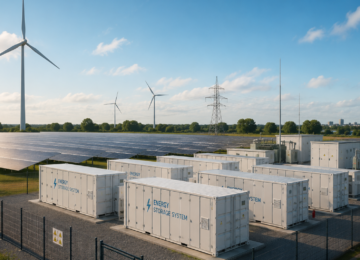
ESNL notes that the new scenarios place greater emphasis on the development of electricity storage. This concerns not only the expected scale, but also the segments and the pace of deployment. The scenarios distinguish the following segments:
- vehicle-to-grid (V2G): feeding electricity from vehicle batteries back into the grid;
- batteries at businesses, with data centers listed separately;
- storage at the same location as solar farms (colocation);
- storage at the same location as wind farms (colocation);
- standalone storage projects with their own grid connection (standalone, front-of-the-meter);
- storage for households and small business users.
This classification helps to better assess the integration of storage into the power grid. Each segment has a different effect on the grid and connects at a different point. Depending on the scenario, ESNL assesses the projected rollout of batteries and other forms of electricity storage as ranging from realistic to very ambitious. The scenarios describe possible developments, not guaranteed outcomes.
Reasonable assumptions for standalone storage
ESNL has urged caution regarding assumptions about the scalability of standalone storage projects. According to ESNL, all scenarios take this into account. Rising grid rates are putting pressure on the business case for large-scale batteries. ESNL also notes that market participants are implementing fewer projects than previously expected. ESNL had already pointed out the expected increase in net rates of approximately 20% in 2027. Feasible financial conditions are therefore important for the storage sector. ESNL advocates taking these conditions into account in grid planning, so that grid operators do not count on storage capacity that may not be realized.
Assessing the development of test questions based on comparable principles
The trend in electricity demand is a key factor in grid planning. In the Scenarios for the 2024 Investment Plans In the “Climate Ambition” central scenario, demand increases from 119 TWh in 2019 to 184 TWh in 2030. The report thus outlines strong growth. This amounts to over 4% of growth per year, with a range of over 3% to over 6% per year across the three scenarios.
A motion dated May 27, 2026, cites an electricity demand for the KEV 2025 of 136 TWh in 2030. That figure is lower than the IP2024 figure mentioned, but the comparison is not a one-to-one match: IP2024 also includes demand from power-to-X and storage, whereas the KEV figure used here does not. Only a comparison using the same scope can clarify exactly how much the expected demand trends actually differ.
ESNL advocates for a realistic and well-founded projection of demand in the new scenarios. In this regard, ESNL is examining the “Steady Course” and “Delayed Transition” scenarios. A comparison with earlier scenarios requires the same definition of demand and insight into the underlying assumptions. This is important for the energy storage sector: demand trends determine where grid operators invest and how much capacity the grid offers for flexibility and energy storage.
Continue to collaborate, and keep evaluating assumptions
ESNL appreciates the collaboration and the opportunities that Netbeheer Nederland offers to involve market participants in the scenario-building process. According to ESNL, this exchange of knowledge helps to critically evaluate assumptions about energy storage and better align them with real-world conditions. In doing so, ESNL combines knowledge coordination with advocacy for the storage sector.
ESNL looks forward to the publication of the final “Scenarios 2027” by Netbeheer Nederland. Once published, ESNL will be able to interpret the findings and explain what they mean for the energy storage sector. ESNL is committed to remaining involved in the further development and implementation of these scenarios, with a focus on the financial, local, and technical conditions for energy storage. In this way, ESNL works together with its network to build a reliable, affordable, and independent energy system.