
ESNL members in discussions with TenneT about the future inertia market
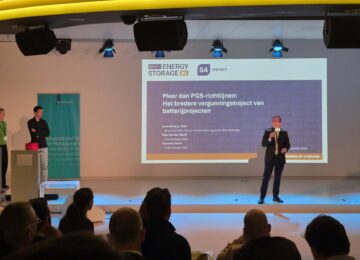
On September 24, as part of its ongoing collaboration with TenneT, Energy Storage NL brought together a group of members to brainstorm the development of a Dutch market for inertia. Inertia is the electricity system’s ability to dampen sudden frequency changes, thereby creating valuable time for other balancing services to respond. Such a market is necessary to ensure the stability of the electricity system now that fewer and fewer conventional power plants are in operation. At the same time, this development offers new opportunities for energy storage: battery systems with grid-forming inverters, in particular, are well-suited to contributing quickly and effectively to the required stability.
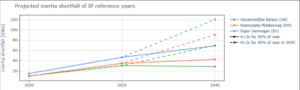
In the current energy system, inertia is primarily provided by the rotating mass of conventional power plants. Wind, solar, and batteries are typically connected to the grid via power electronics and therefore do not inherently provide this physical inertia. As conventional generation declines, the available synchronous inertia also decreases, making the power system more susceptible to rapid frequency changes following a sudden disturbance. TenneT expects the inertia deficit to more than double between 2030 and 2035. A well-functioning inertia market thus contributes directly to a reliable and future-proof electricity system.
TenneT is therefore working toward a hybrid approach that combines its own assets with market-based solutions. The first tender is intended to be a practical and learning-oriented step toward a broader market for inertia. This offers new opportunities for storage companies, particularly for battery systems with grid-forming inverters, which can actively contribute to voltage and frequency stability. At the same time, there are still important design questions regarding, among other things, availability, contract duration, compensation, prequalification, measurement data, and the combination with other system services.
ESNL advocates for a technology-neutral and practical market design that combines system reliability with sufficient investment certainty for market participants. Battery systems with grid-forming inverters can play an important role in this regard, provided that market conditions align with their technical capabilities and that integration with other system services remains possible. These principles were central to the two roundtable discussions with TenneT.
From market design to technical implementation
The market-oriented roundtable focused on how a future inertia market can be structured in a way that is both attractive and reliable. In addition to the level and structure of compensation, this involves clear agreements on availability, contract duration, monitoring, verification, and underperformance. Market participants must be able to recoup investments in, for example, grid-forming functionality, while TenneT wants to retain the flexibility to learn from the first procurement round. A workable market model therefore requires a balanced distribution of opportunities and risks: sufficient investment certainty for providers, combined with clear incentives to actually deliver the agreed-upon performance.
The technical roundtable focused on how inertia from different types of assets can be delivered in a verifiable and reliable manner. ESNL believes it is important that the technical requirements align with the actual capabilities of modern inverters and are formulated in a technology-neutral manner. Prequalification, monitoring, and data requirements must demonstrably contribute to system security and must not create unnecessary barriers to entry.
It must also be clear in advance how inertial supply can be combined with other system services and which function takes priority in the event of simultaneous activation. Batteries can provide multiple services, but only if it is clear under what circumstances capacity remains available and how this can be verified. The technical implementation must ensure system security without unnecessarily excluding innovative market participants and solutions.
Next: Working Together Toward the First Tender
ESNL welcomes the fact that TenneT is actively involving market participants as early as this initial design phase. By allowing technical suppliers, developers, and owners of storage facilities to contribute their ideas before the product and tender requirements are finalized, bottlenecks can be identified in a timely manner and conditions can be better aligned with real-world practices. This open dialogue increases the likelihood of a workable, technology-neutral inertia market that both ensures system security and provides room for investment and innovation.
The meeting on September 24 marks a first step toward market-based procurement of inertia. TenneT intends to begin with a competitive tender and then further develop the approach based on system needs, technological developments, and market experience. The next round of stakeholder consultations is scheduled for 2027; a follow-up tender is expected no sooner than approximately two years after the first round. In the longer term, procurement may evolve toward more dynamic and shorter procurement cycles. ESNL, together with its members, remains committed to an accessible and technology-neutral market design in which storage can make a full contribution to the stability of the electricity system.
More information about the expected inertia requirements, the phased approach, and the first procurement round can be found on the TenneT's website. It also includes the documents from the stakeholder session in which ESNL and its members participated.