

International Study: Investments in Energy Storage Require Predictable Revenues and Costs
The global energy storage market is growing rapidly, but securing sufficient funding for new projects is not a given. The new white paper Unlocking Global Investment in Energy Storage A study by TNO shows that, above all, predictable revenue, stable regulations, and a clear role within the system are key factors in determining the financial viability of energy storage in 25 different countries.
This also applies to the Netherlands, as the financial market study by Energy Storage NL—which will soon be made public—will also show. Energy storage is necessary to keep an energy system with an increasing share of renewable energy reliable and cost-effective. However, project developers must be able to raise sufficient capital to carry out their projects and keep them profitable.
Globally, the need for investment in storage is growing
A global agreement has been reached to achieve 1,500 GW of energy storage in the electricity sector by 2030. According to the study, reaching that level will require up to $2 trillion in global investments. Furthermore, not only is the amount of storage increasing, but the need for different storage durations and technologies is also growing.
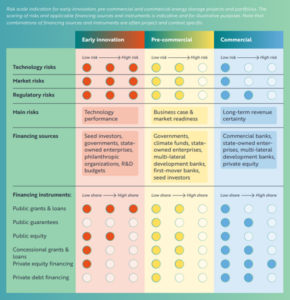
As a result, financial viability is becoming increasingly important. According to the study, technically mature projects are not immediately financeable. Investors consider factors such as the predictability of revenue, risk allocation, technical performance, and policy stability.
Cash flow is the deciding factor
One of the key conclusions is that financiers ultimately focus primarily on the revenue a storage project can generate. Long-term contracts, such as tolling agreements, capacity contracts, and PPAs, can help reduce uncertainty in this regard.
Combining different revenue streams also plays an important role. For example, energy storage can participate in energy markets, balancing markets, and capacity markets. Whether this so-called “value stacking” is actually possible depends heavily on the structure of national markets and regulations.
Practice in the Netherlands shows various approaches
The study also briefly addresses the Dutch context. For example, Mufasa in Vlissingen is cited as an example of a large-scale battery project that operates entirely on commercial market revenues and was financed without collateral from sources outside the project itself. The Bommelerbuffer in Zaltbommel is also mentioned. This 11 MW / 22 MWh battery is connected to the Bommelerwaard Wind Farm. The report uses the project as an example of private financing that combines storage with local generation and various flexibility services.
These examples show that there is no single financing model for energy storage. The appropriate structure depends on factors such as the technology, system function, market, and maturity of the project. This is a central theme in international research. The figure illustrates the type of financing that a particular project typically relies on.
Grid rates and regulations remain key factors
ESNL finds the Dutch analysis familiar. The report cites uncertainty regarding grid tariffs as the greatest financing risk. Changing rates and regulations affect operating costs and, consequently, directly impact the business case for storage projects. According to the report, situations in which storage is treated as both a consumer and a producer can also lead to double taxation or double grid costs.
For Energy Storage NL, this underscores the importance of stable and appropriate framework conditions for energy storage. Investors can manage technological risks, but changes in grid tariffs, taxes, and market access—among other factors—must be sufficiently predictable to enable long-term investments.
ESNL: Acceleration Requires Affordable Costs and Stable Regulations
The report ultimately outlines a clear path for the rollout of storage: prepare, deploy and accelerate. First, countries must determine where and for what system needs storage is required and establish the appropriate regulations. Subsequently, public funding, long-term contracts, and risk-sharing can help get projects off the ground. Once sufficient practical experience has been gained, the next step should be to move toward replicable projects and larger-scale financing by private parties.
The Dutch market is already trying to scale up battery storage, even though the regulations and the details of the system requirements are still in the early stages. As the soon-to-be-published ESNL market study will show, this is causing friction. For Energy Storage NL, this confirms that financing requires not only capital but, above all, a market in which the system value of storage can be realized. This requires clear market rules, predictable grid tariffs, and a sufficiently long-term perspective. With the current high and unpredictable grid tariffs—which recently rose again by 20%—most BESS projects will not be profitable in the future. The upcoming Comprehensive Energy Storage Policy Agenda must contribute to more stable policy frameworks. However, the costs of storage must also be addressed in order to achieve sufficient energy storage for a reliable and cost-effective Dutch energy system.
Latest News
 News
International Study: Investments in Energy Storage Require Predictable Revenues and Costs
October 28, 2026 News
Consultation on the Energy System White Paper: The Cabinet Anticipates Significant Growth in Energy Storage Through 2040
October 27, 2026 Interview